NaftalanPhysiotherapyTraction (spinal decompression)
Traction (spinal decompression)
An orthopaedic method that takes load off the spine — it lowers intradiscal pressure and decompresses a pinched nerve.
Traction is an orthopaedic procedure in which the spine is stretched under control. It is among the most workable ways of acting on the spine in compression syndrome: it lowers intradiscal pressure, eases muscle spasm and decompresses the point where a nerve is pinched.
How spinal traction is carried out
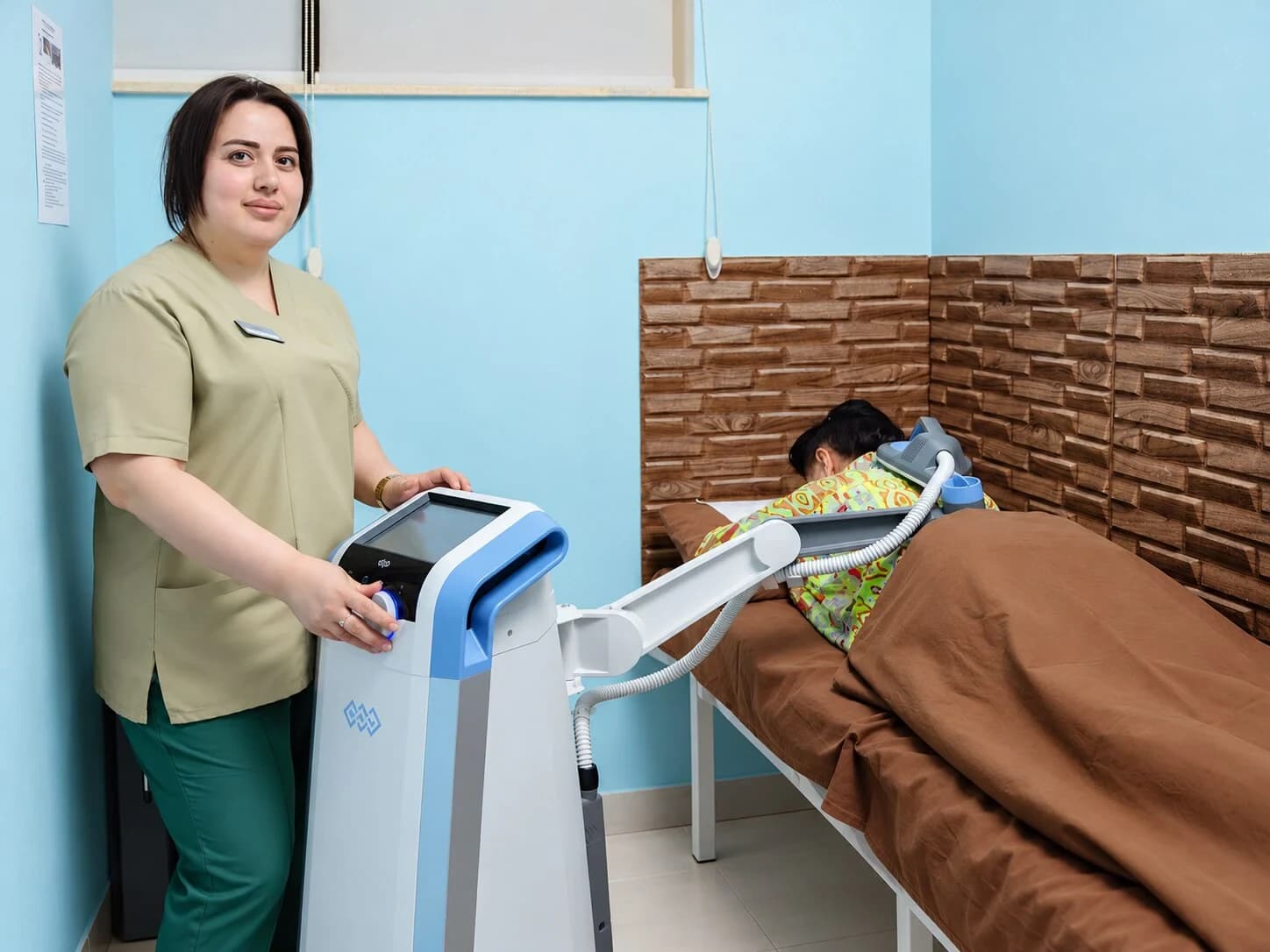
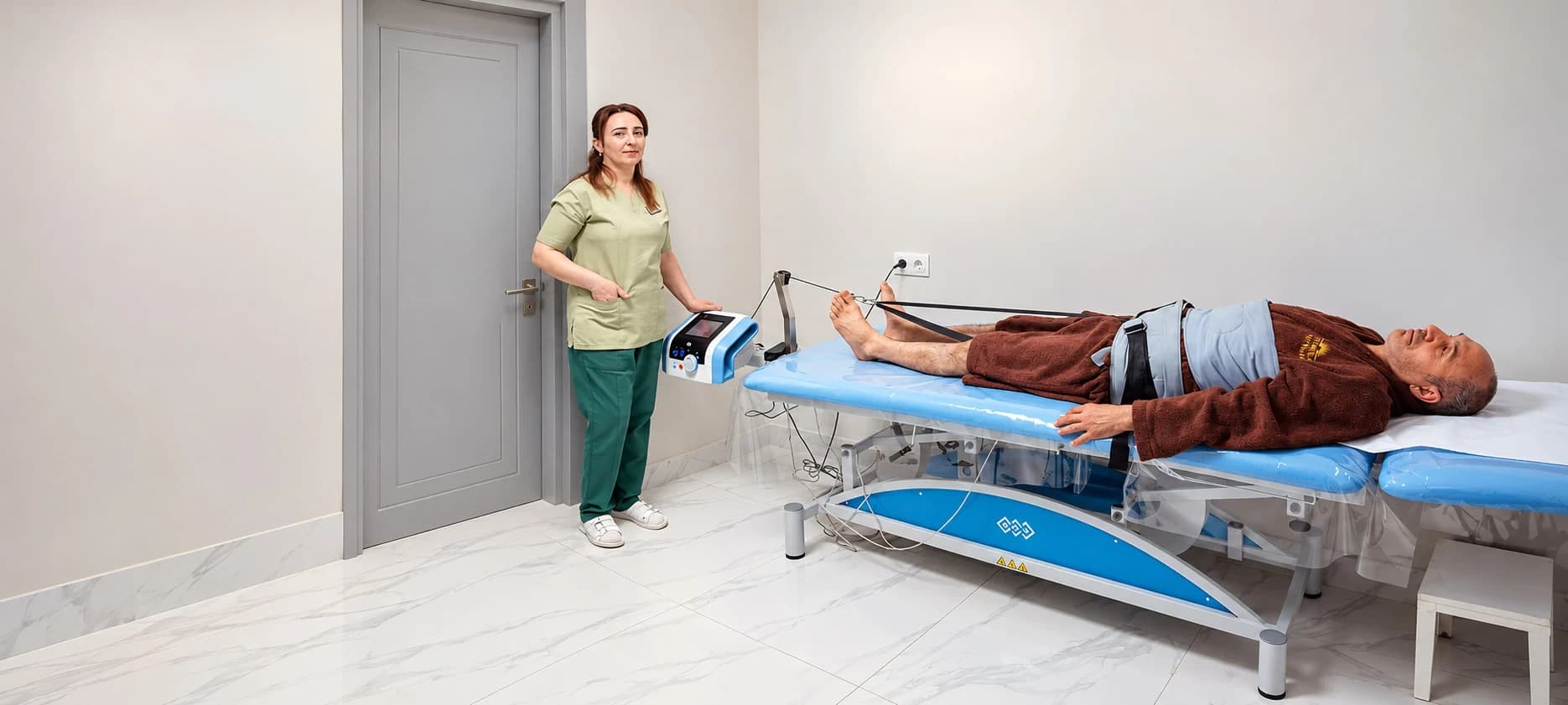
The guest lies on a purpose-built table, the lower back or neck is secured with a belt, and the device then applies a pulling force. The force rises in steps and is never taken to the point of pain — the guest feels only a mild stretch. To strengthen the effect, a massage or a muscle-relaxing physiotherapy session is scheduled beforehand; that order is built into the course timetable in advance.
What traction does in hernia and protrusion
When the load on the spine falls, the intervertebral disc gets a little room and the pressure on the nerve roots eases. This is why the method is used in neurosurgery, traumatology and neurological rehabilitation:
How the stretch acts on the spine
- Lower intradiscal pressure
- Softening of muscle contracture
- Decompression where a nerve is pinched
- Relief of pain in protrusion and hernia
- Movement returning to the lower back and neck
- Support for recovery after injury or fracture
Who traction is not prescribed for
Traction is given only on prescription, and the prescription rests on the examination at check-in; bringing any MRI or X-ray results you already have speeds the process up. Osteoporosis, acute inflammation in the spine, a fracture and certain other conditions rule the procedure out. Traction is not a naftalan treatment, but it slots easily into the daily timetable of a naftalan course.
Spinal traction in Naftalan — Sun City Hotel & Spa
The traction table is in the treatment wing — inside the hotel's own building. A short quiet period is advised afterwards, so most guests put the session in the second half of the day, when being close to the room is convenient.
When Traction (spinal decompression) is prescribed
- Intervertebral disc hernias and protrusions
- Spinal curvature
- Pain syndromes involving nerve compression
- Degenerative spinal conditions
- Rehabilitation after injury or fracture
Questions and answers