NaftalanPhysiotherapyCarboxytherapy
Carboxytherapy
CO₂ applied under the skin — the body reads it as oxygen shortage and increases blood flow to the area.
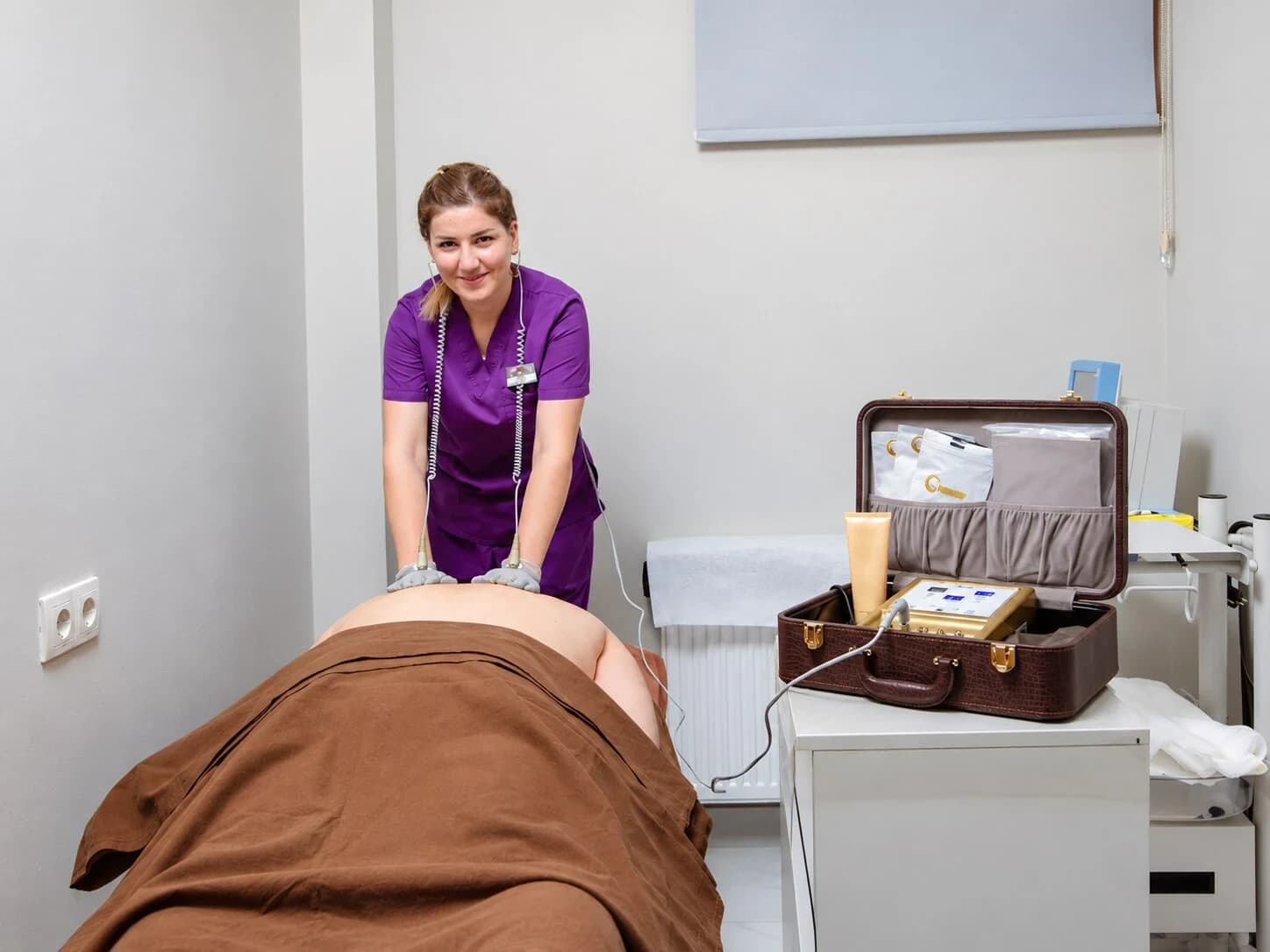
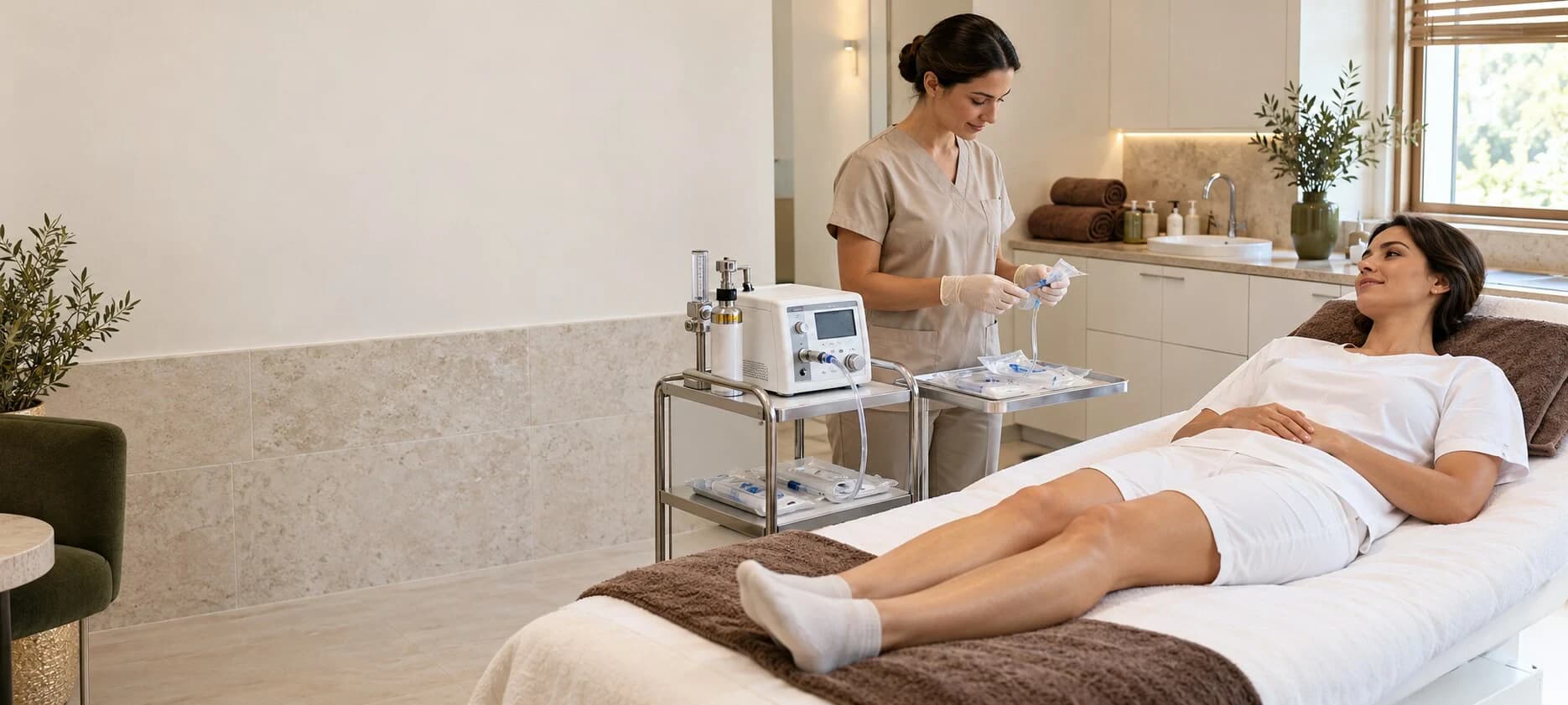
Carboxytherapy applies carbon dioxide (CO₂) into the subcutaneous layer or onto the skin. The body reads that area as short of oxygen and responds by speeding circulation, sending more oxygen into the tissue. The method is used for both medical and cosmetic purposes.
How carboxytherapy is carried out: applying CO₂
The gas is delivered directly into the subcutaneous layer through a medical device and a very fine needle. The guest feels light pressure during delivery and warmth in the area; a characteristic crackling sensation may remain briefly under the skin and passes as the gas is absorbed. The points treated and the number of sessions are decided by the physician according to the complaint.
What carboxytherapy acts on
The main effect of the procedure is an increase in blood flow to the area. That tells in programmes working on pain and in programmes working on the condition of the skin alike:
What applying CO₂ does to the area
- Stronger circulation in the area
- Better oxygen supply to the tissue
- Less pain in rheumatological complaints
- Relief in osteochondrosis and hernia
- Improved skin tone
- A complement to the other physiotherapy procedures
Contraindications and medical supervision
Carboxytherapy is given only on prescription: the examination and laboratory tests on arrival determine which area is treated. Pregnancy, severe heart or kidney failure, bleeding disorders and acute inflammation in the area are restrictions. The procedure is not a naftalan treatment, but it can run alongside a naftalan course.
Carboxytherapy in Naftalan — Sun City Hotel & Spa
Carboxytherapy is carried out in the treatment wing under medical supervision — inside the hotel's own building. No long recovery is needed, so guests usually continue with the other procedures scheduled for that day.
When Carboxytherapy is prescribed
- Rheumatological conditions, arthrosis
- Intervertebral hernia, osteochondrosis
- Impaired spinal cord function
- Vestibular disorders
- Poor circulation
- Cosmetic renewal programmes
Questions and answers