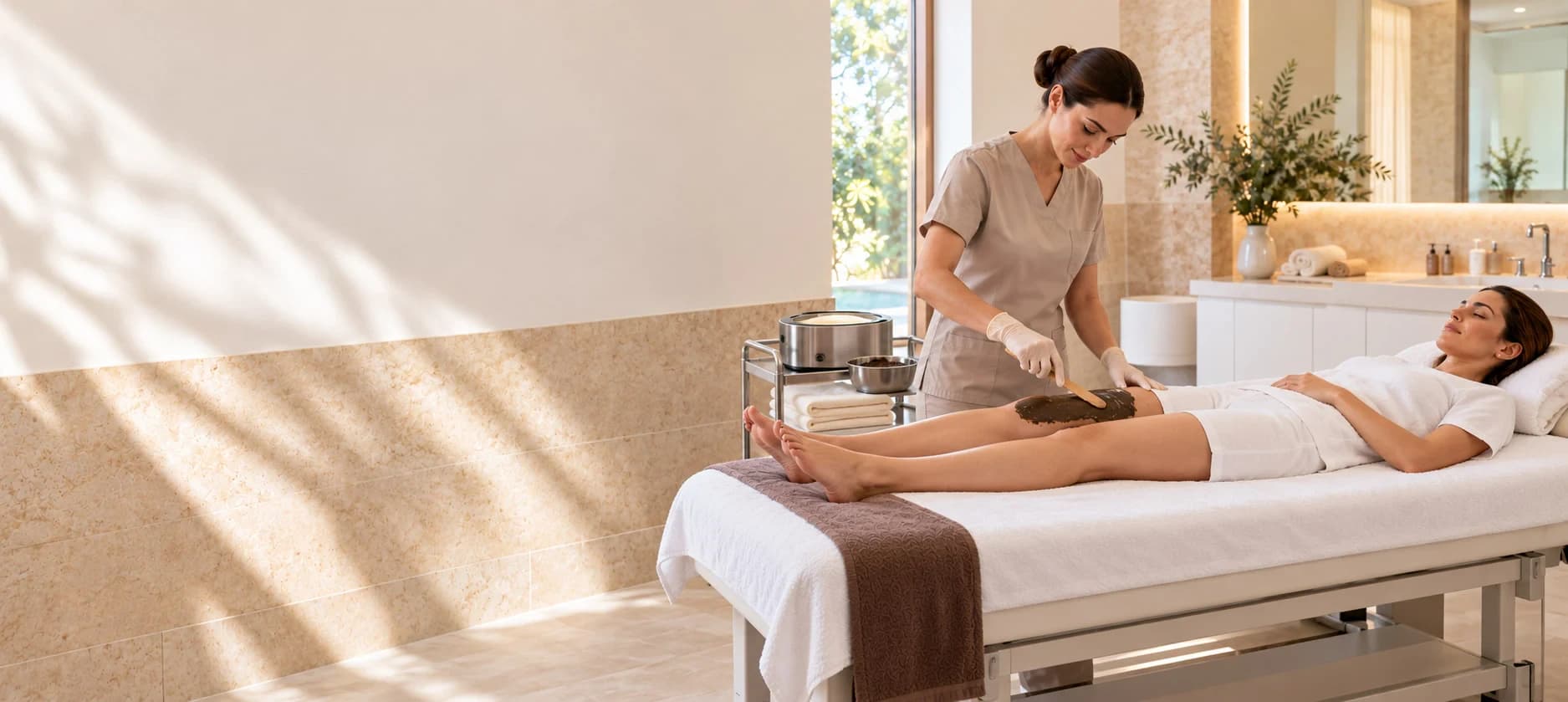
A massage session in a sunlit room

NaftalanMedical treatmentsMud & paraffin therapy

Mud & paraffin therapy

Mud and paraffin applications are the supporting part of a naftalan course. They do not stand in for a bath; the point is to hold heat in the tissue for longer and to carry the effect through the gaps between procedures.

Paraffin therapy. Melted paraffin is laid over a joint or muscle in thin layers and covered. Because paraffin gives its heat up slowly, the area stays warm for a long stretch, which helps muscle tension ease and a joint move more freely. It is used most often on hands, feet, shoulders and the lower back, and during rehabilitation after an injury.

Mud applications. Therapeutic mud is warmed and applied locally to particular areas. The procedure is used for joint and spinal complaints, and within skin-care programmes. Mud can be applied generally or to a single area — your physician decides which.

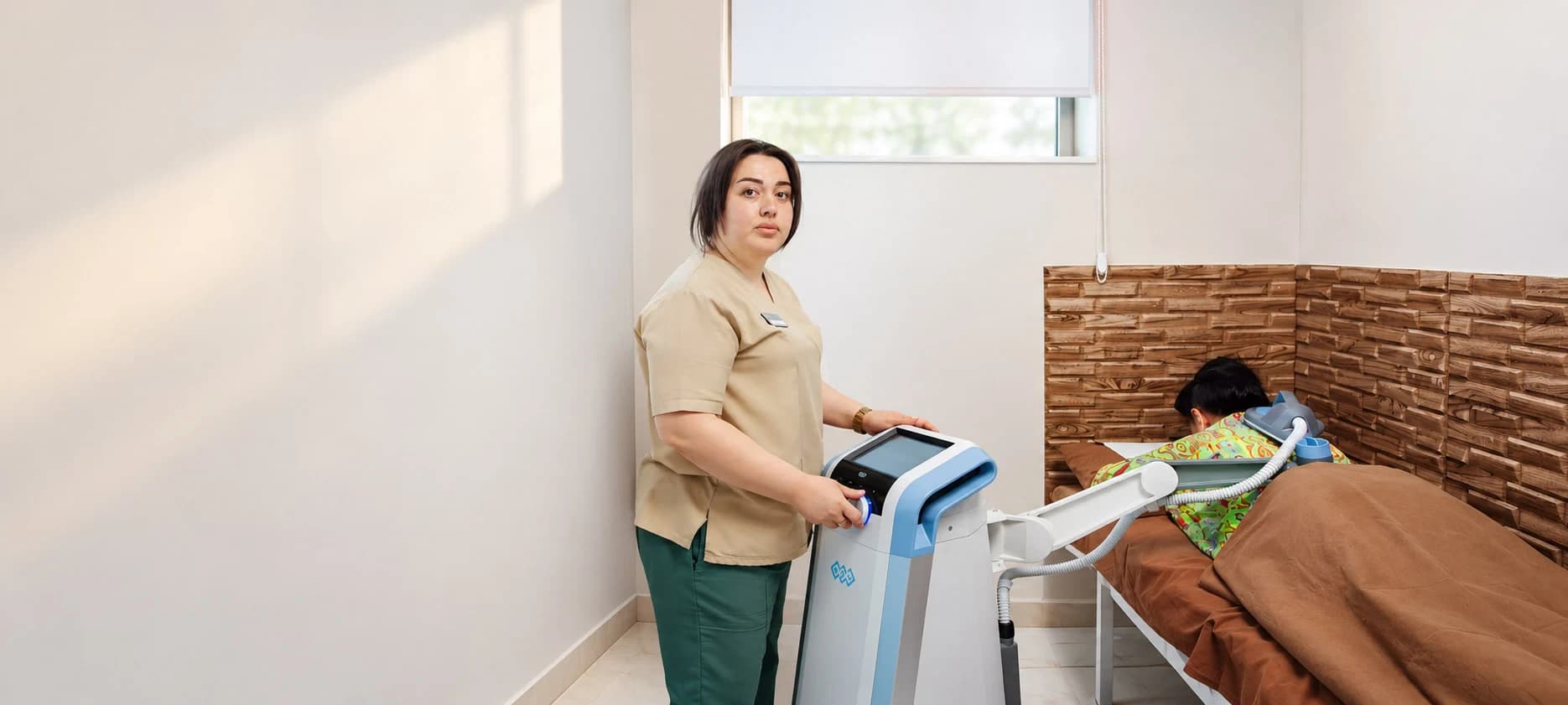
Both procedures are given on prescription and under the supervision of medical staff. Temperature, layer thickness and session length are set from your own results; in certain blood-pressure and cardiovascular conditions heat procedures may be limited or not prescribed at all, and that becomes clear from the examination and blood work on arrival.

When a course is planned, mud and paraffin are not put on the same day as a naftalan bath; they are usually scheduled on non-bath days, alongside physiotherapy. A shower and twenty to thirty minutes of rest follow each session.

Book a room

Guests
See all rooms and rates →

Questions and answers

Frequently asked questions

No, they do not. Mud and paraffin applications are the supporting part of a naftalan course: what they are for is holding heat in the tissue for longer and carrying the effect through the gaps between procedures. The bath keeps its place; these applications round out its result.

Melted paraffin is spread in thin layers over the joint or muscle and covered. Because paraffin gives its heat off gradually, the area stays warm for a long time — which helps muscle tension release and pain ease. The procedure is painless; the guest feels no more than a comfortable warmth.

Most often for joint and muscle pain, osteochondrosis, arthrosis and arthritis, and in recovery after injury. Where there is muscle tension and restricted movement, applying heat brings relief. The particular area and the number of sessions follow from the examination on arrival.

Both are heat procedures, so they are not prescribed where heat is restricted: acute inflammation, a raised temperature, certain cardiovascular conditions, pronounced varicose veins, pregnancy, and an open wound in the area. These are settled by the examination and the laboratory tests on arrival.

Usually not. Two heat procedures are not put in one day, because the load on the body becomes too much. The physician builds the timetable so that the applications fall between bath days and the effect carries on through the gaps. That split is not arbitrary — the sequence of a course is built on it.

Paraffin works mainly by holding heat: it is spread in thin layers and warms the area gradually. A mud application acts through its composition as well as through the heat. Which is chosen depends on the kind of complaint and the state of the skin — the physician settles that at the examination.

Other treatments

All treatments

Sun City Naftalan sanatorium

Ask an AI what it knows about us

The question opens ready to send; the answer comes from what the assistant reads on the open web and on our pages. We do not influence it.