NaftalanPhysiotherapyLymphatic drainage
Lymphatic drainage
Massage or pressotherapy that speeds lymph flow — it reduces oedema and activates the metabolism.
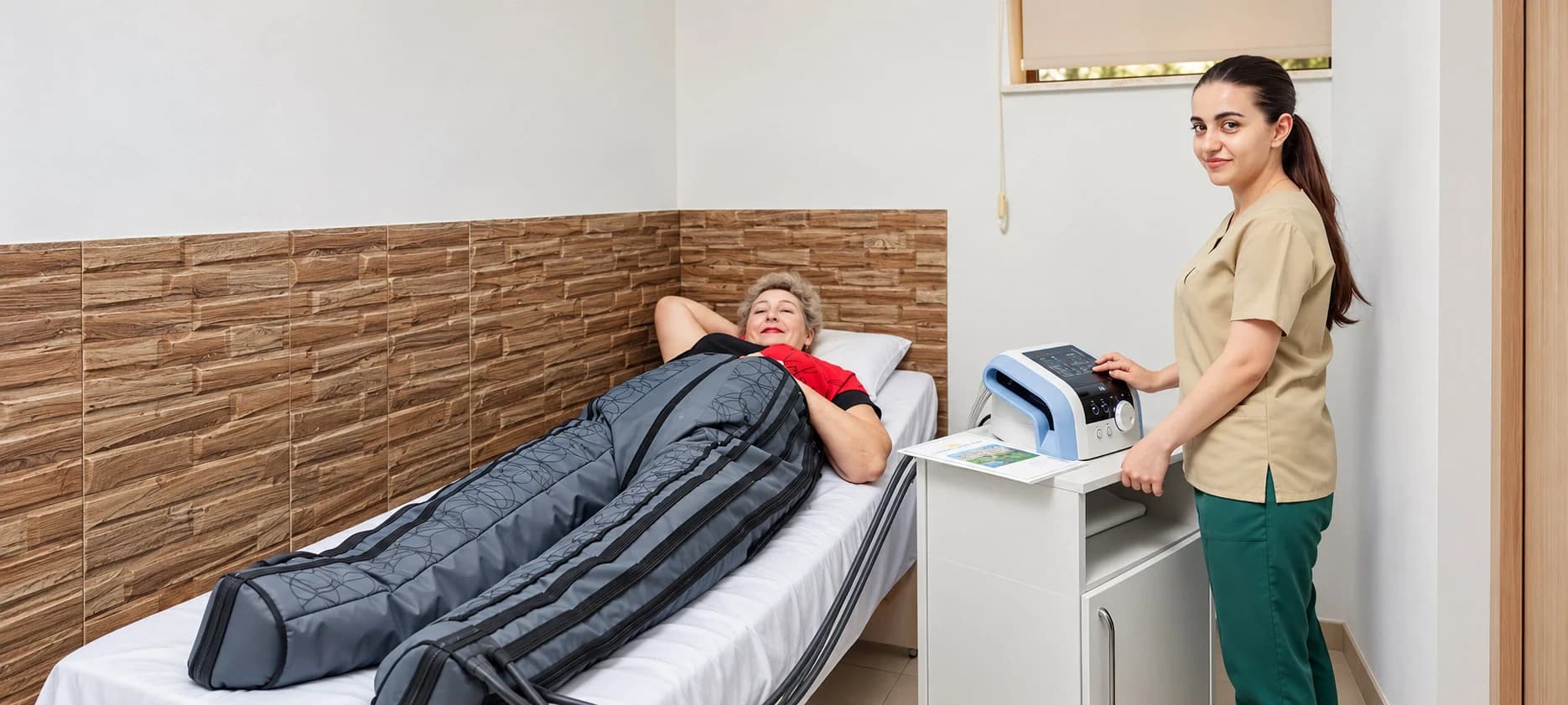
Lymphatic drainage is a physiotherapy massage or pressotherapy that speeds the flow of lymph through the body. It helps clear excess fluid and toxins, reduces oedema and activates the metabolism. It is often written into programmes for guests arriving with heaviness in the legs, swelling after a long flight, or venous problems.
How lymphatic drainage is given: by hand and by pressotherapy
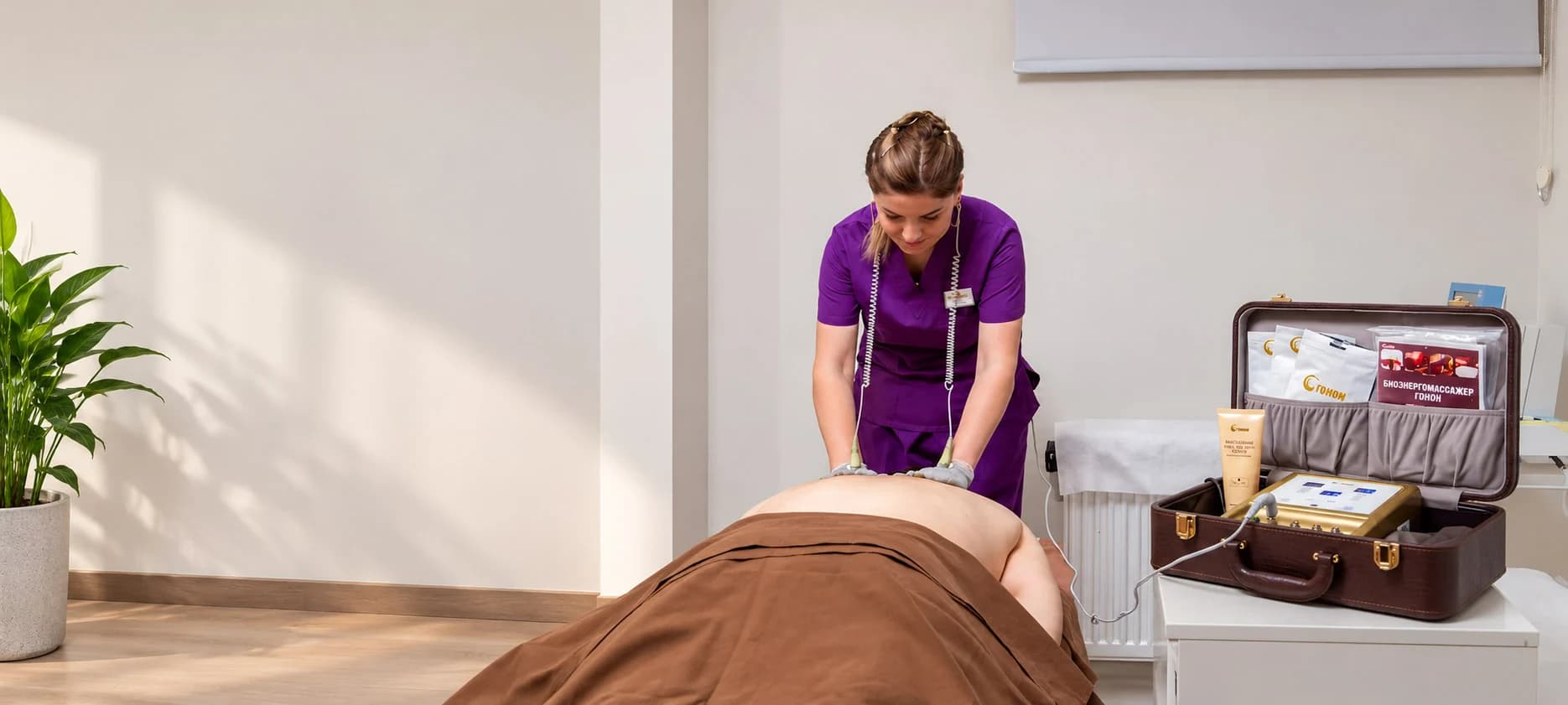
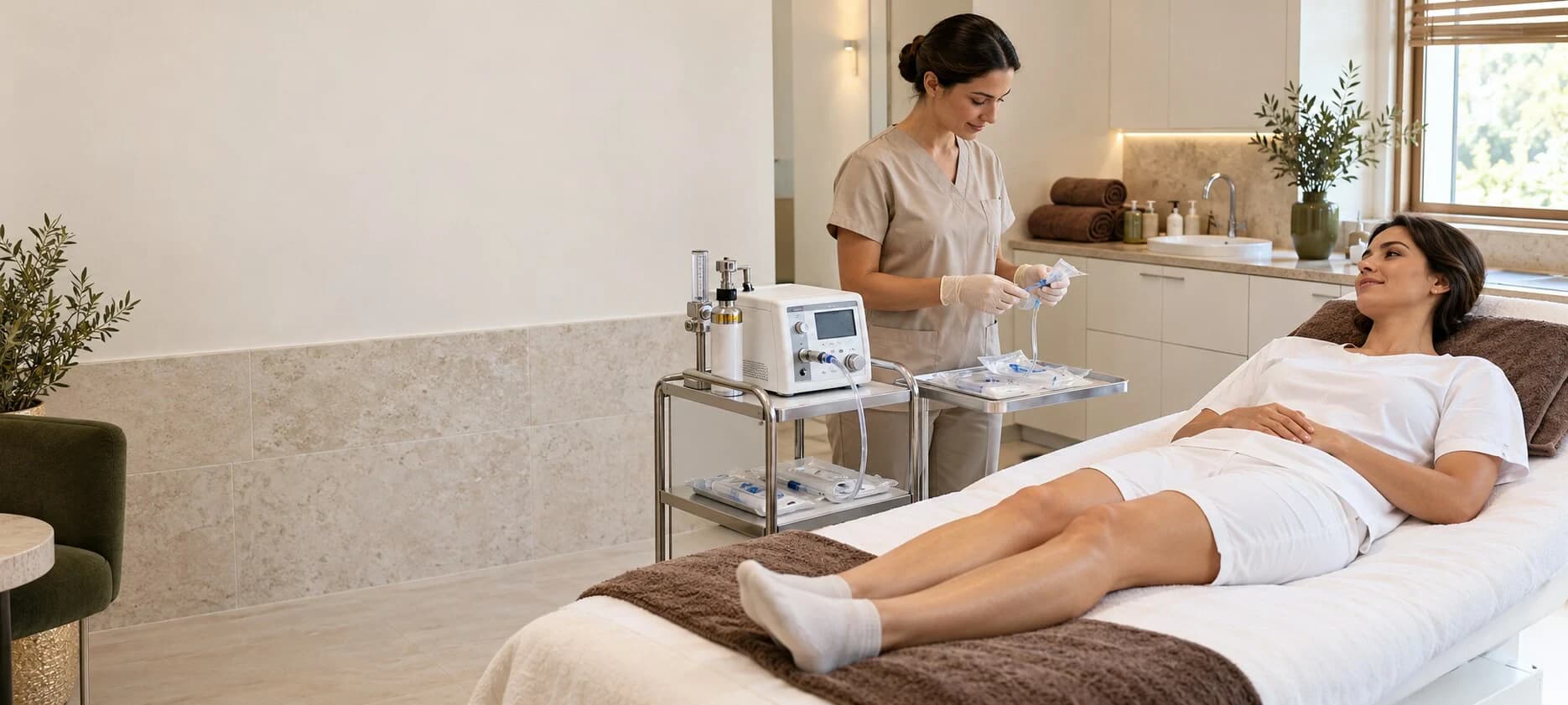
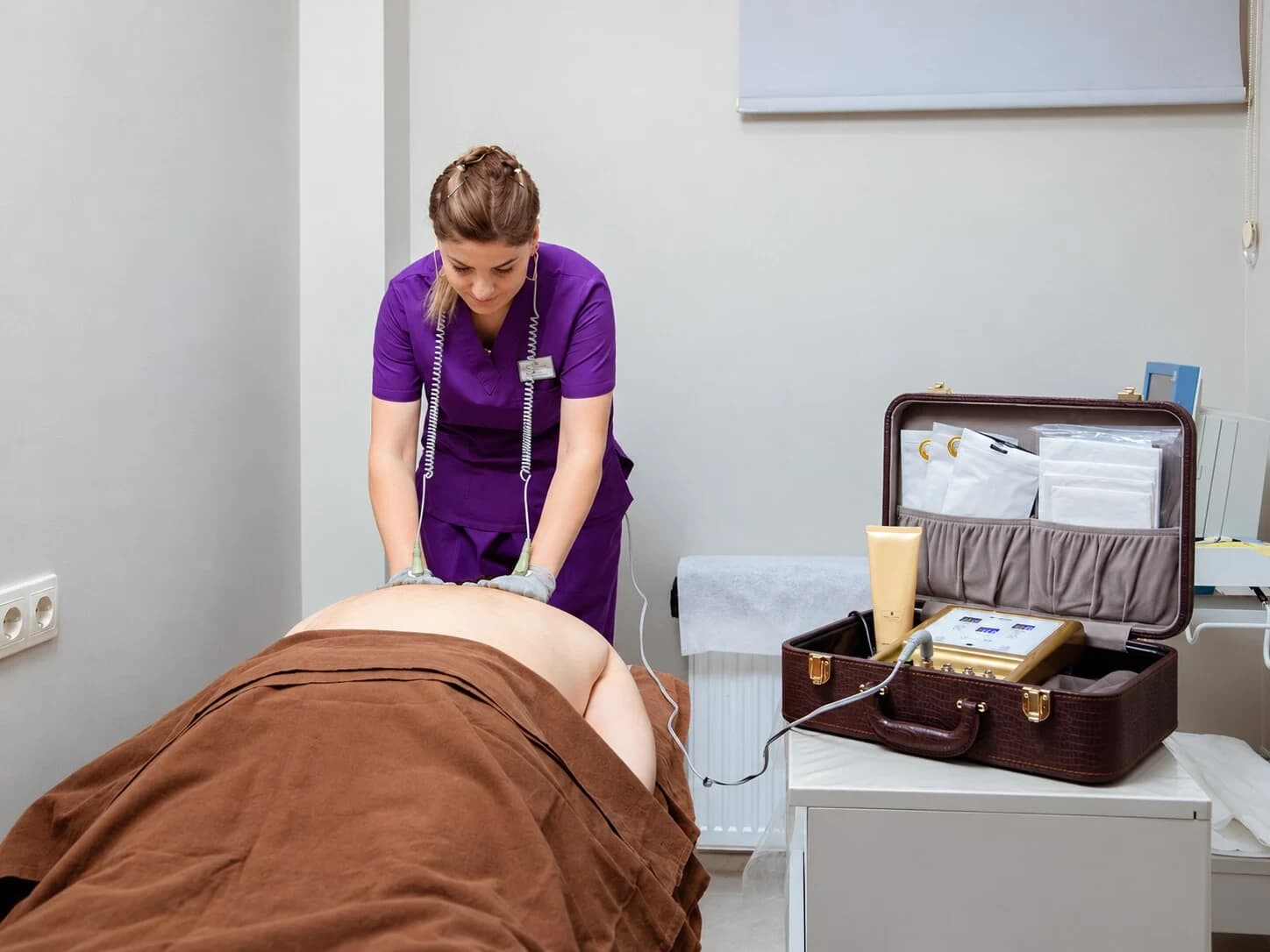
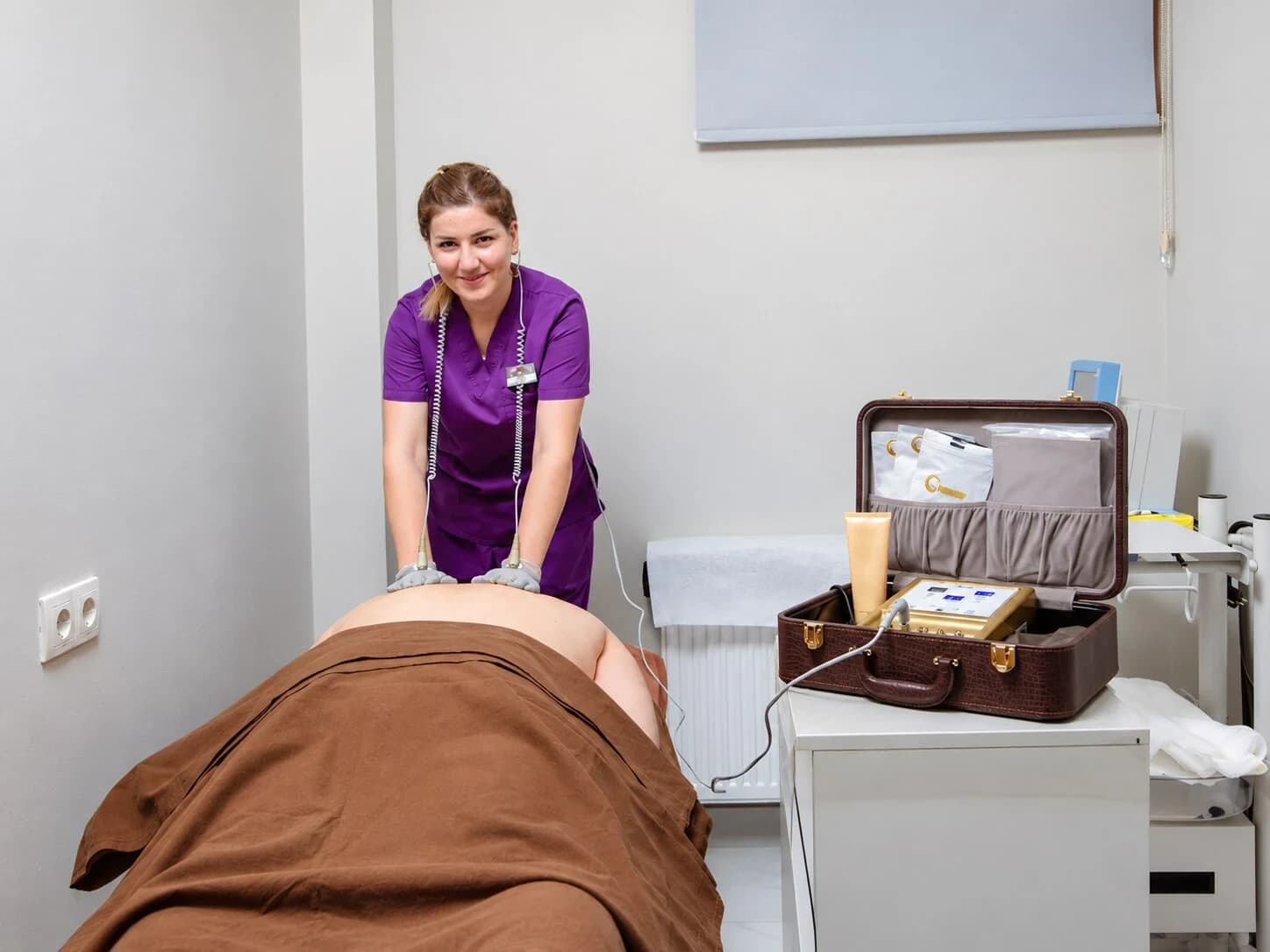
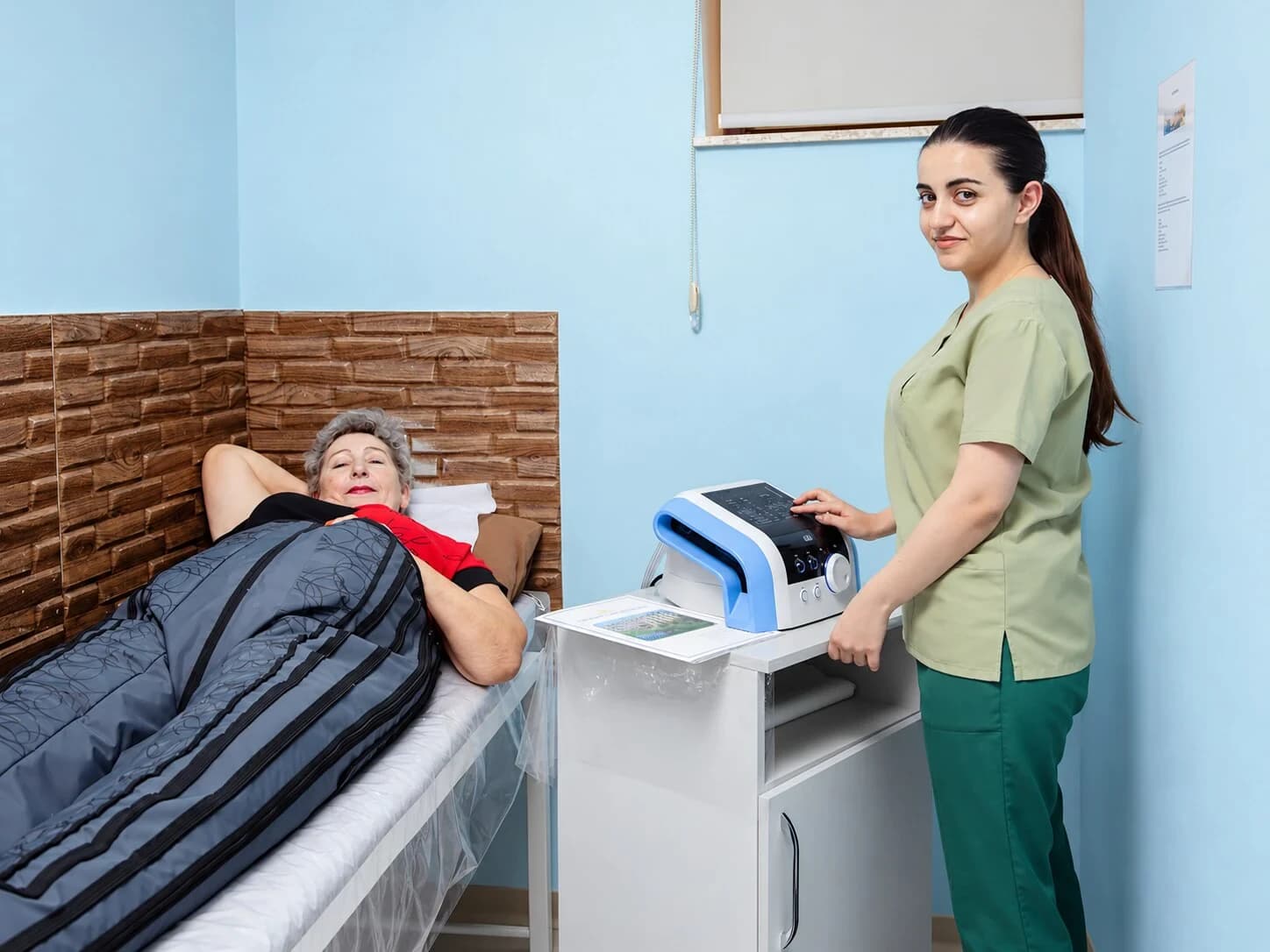
The procedure can be given in two forms: by hand, with soft rhythmic movements along the lymphatic pathways, or with a pressotherapy device, where cuffs inflate in sequence to create air pressure. In both the movement runs from the periphery towards the centre. The session is painless, and most guests describe it as restful.
What lymphatic drainage does for oedema and heavy legs
Unlike the bloodstream, the lymphatic system has no pump of its own — it depends on movement and on pressure from outside. Lymphatic drainage supports exactly that flow:
The effects of working with lymph flow
- Less swelling and oedema
- Heaviness in the legs easing
- Better circulation
- A more active metabolism
- A favourable effect on skin elasticity
- Support for recovery after physical strain
When it is not prescribed, and how the timetable is built
Sessions are given as a course. Lymphatic drainage is usually not scheduled on the same day as a naftalan bath — the physician separates them so the two procedures do not load one another. Acute inflammation, the acute stage of thrombosis and certain heart and kidney conditions may restrict it; this is settled at the examination on arrival.
Lymphatic drainage in Naftalan — Sun City Hotel & Spa
Lymphatic drainage is given in the hotel's spa and treatment area. For guests who have come a long way it makes a comfortable first-days procedure: it helps clear the swelling in the legs before the heavier bath timetable begins.
When Lymphatic drainage is prescribed
- Swelling and oedema
- Tired, heavy legs
- Chronic venous insufficiency
- Cellulite and loss of skin elasticity
- Physical strain and fatigue
- Constipation and sluggish bowel function
Questions and answers