
Where naftalan oil is used in dermatology, how a course is built, what can be expected of it and who it is not prescribed for.
This article is general information and does not replace medical advice. Any procedure is prescribed only after an examination and after contraindications have been checked.
Naftalan oil has been used in sanatorium dermatology for decades. The conditions people most often come with are the chronic, periodically flaring skin diseases — psoriasis, eczema, atopic dermatitis, neurodermatitis and seborrhoea. What follows explains how a course is built and what is realistic.
Where it is considered
- Psoriasis — in remission or in a settling flare; during an acute, widespread flare the bath is not prescribed.
- Eczema and atopic dermatitis — in a chronic course, where dryness and itching dominate.
- Neurodermatitis — in a long-standing, stress-linked course.
- Seborrhoea — particularly with scalp complaints, alongside naftalan-based hair care.
This list is not for making a diagnosis. Whether your case fits is for a dermatologist to decide after examining you.
How a course is built
A skin programme usually has several components:
- The full-body naftalan bath — the main procedure where the process is widespread.
- Local applications and naftovit oil — applied to individual patches; usable where a bath is not suitable.
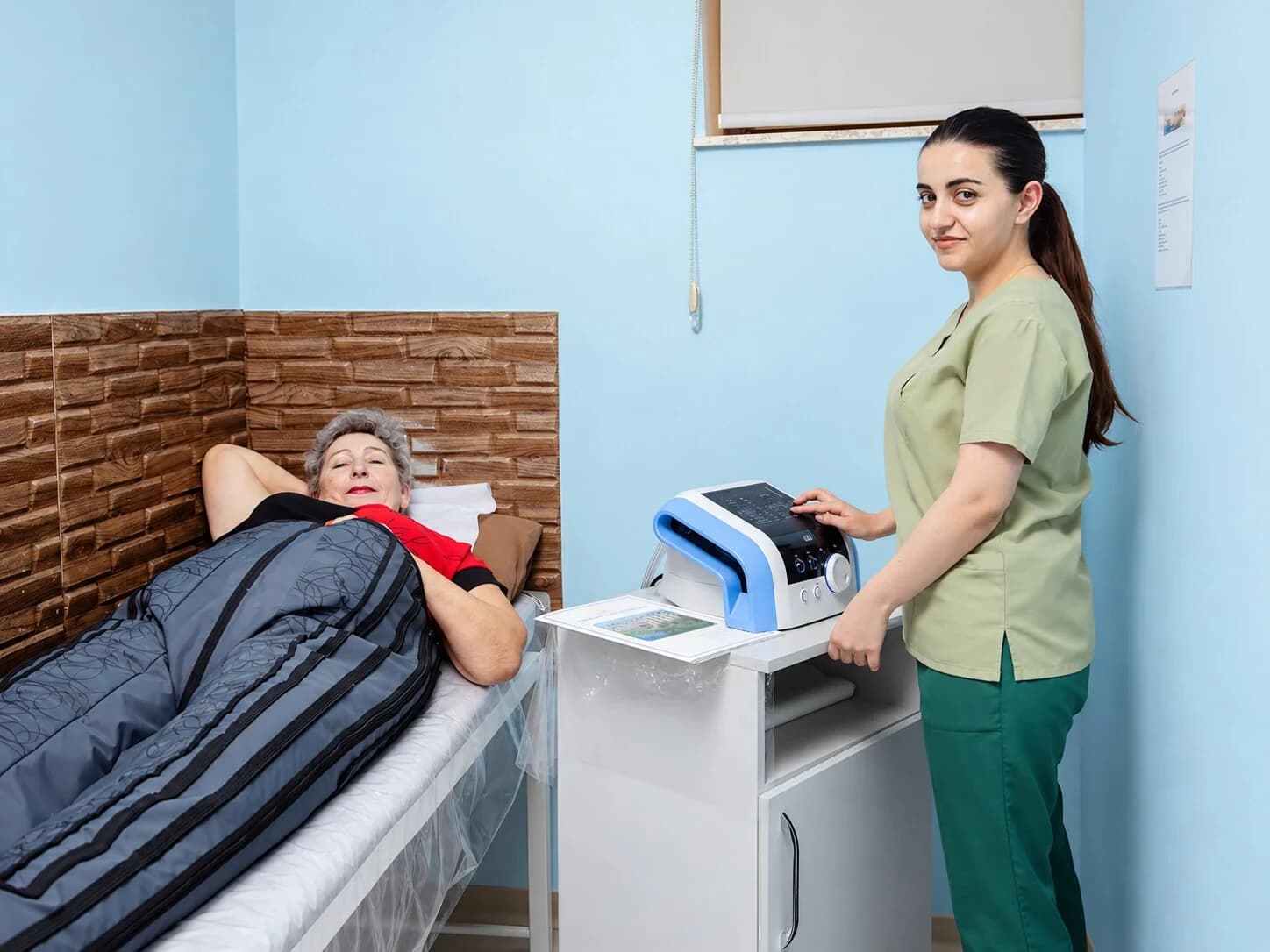
- Infrared therapy — together with a naftalan application, where prescribed.
- Speleotherapy, the salt room — where skin and respiratory programmes meet.
- Naftalan-based hair and body care — the supporting part.
A course usually runs from ten days to two weeks, but the exact length follows from the state of the skin and from how the procedures are tolerated.
What can be expected
A naftalan course does not "cure" a chronic skin disease — do not trust a source that promises it. The aim of sanatorium treatment is to ease symptoms and support a period of remission; the result is individual and comes from a course, not from one session. Do not stop the treatment your dermatologist has prescribed — the course is an addition to it, not a replacement.
When it is not prescribed
An acute, widespread flare, infection or open wounds on the skin, fever, malignant tumours, severe heart or kidney failure, pregnancy, individual intolerance. The list is not exhaustive and every case is weighed on its own.
What to do before you travel
Bring your dermatologist's most recent opinion, the diagnosis and a list of what you are taking — and send them to us in advance if you can. Our doctors can judge before the trip whether a course suits the stage you are at; during a flare, postponing may be the better decision.