
Where naftalan sits — and where it stops — in chronic prostatitis, pelvic pain, pelvic floor weakness and women's health programmes.
This article is general information and is not for making a diagnosis. In this field every procedure is prescribed only after an examination by the relevant specialist and on their indication.
At the Naftalan resort the urological and gynaecological directions are separate programmes. The methods used here differ from the general bath and always run under the supervision of a specialist.
Urological programmes
The complaints people come with most are chronic prostatitis, long-standing pelvic pain and weakness of the pelvic floor muscles. The procedures used:
- The naftalan sitz bath — immersion to waist level, and the basis of programmes aimed at the pelvic area.
- Urological treatment with naftalan — a separate method built on naftalan applications and rectal procedures.
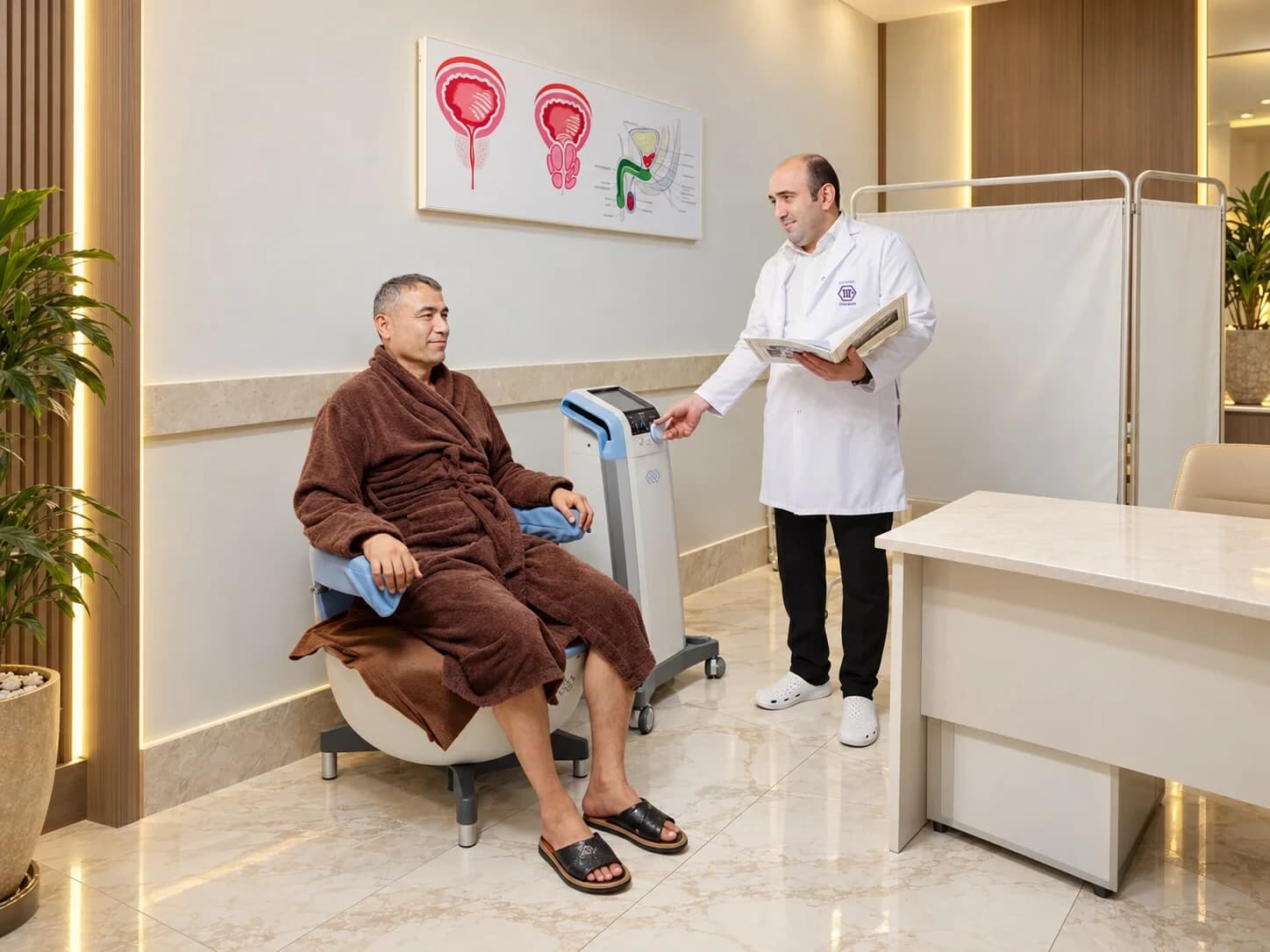
- Emsella — non-invasive pelvic floor therapy carried out seated and fully clothed; used for both women and men.
In acute prostatitis, acute infection or fever these procedures are not prescribed — the flare has to be dealt with first.
Gynaecological programmes
On the gynaecological side, naftalan applications are considered in chronic, stable post-inflammatory states and in long-standing pelvic complaints. The programme is built on a gynaecologist's examination and, where needed, on further investigation.
The procedure is not prescribed in pregnancy, in an acute inflammatory process, with bleeding of unknown origin, where a malignant tumour is suspected, or where the diagnosis has not been established.
On the pelvic floor and incontinence
Urinary incontinence has several different causes and they call for different approaches. Pelvic floor therapy can help only in certain types of disorder, and which type you have is established by a urologist or gynaecologist on examination. This is not a procedure to prescribe yourself.
What can be expected
The aim is to ease symptoms and support the course of a chronic complaint. A sanatorium course does not replace the treatment your urologist or gynaecologist has prescribed, nor antibiotic therapy, nor a planned intervention. The result is individual.
Before you travel
Bring your diagnosis, your most recent examination and test results, and your specialist's opinion. Consulting in advance is especially worthwhile in this field — send the documents and our doctors will write back on whether the programme suits you now.