
Where a sanatorium course sits in recovery, when it can start, which procedures are chosen and why the surgeon has the final word.
This article is general information. During recovery, any procedure begins with the agreement of the doctor who operated on you or is treating you.
Recovery after an injury or orthopaedic surgery is long, and it is often hard to keep up alone at home. The role of a sanatorium course at this stage is simple: to gather the procedures into one schedule, under medical supervision.
Timing: the question that matters most
In recovery, "when" matters as much as "what". Every procedure has its own starting point: heat applications, magnetic field, massage and movement therapy join at different stages. Only the doctor who operated on you, or who managed the injury, can give that timing. So before planning the trip, get a written opinion or clearance from your surgeon — it is the document the course is built on.
Which procedures are chosen
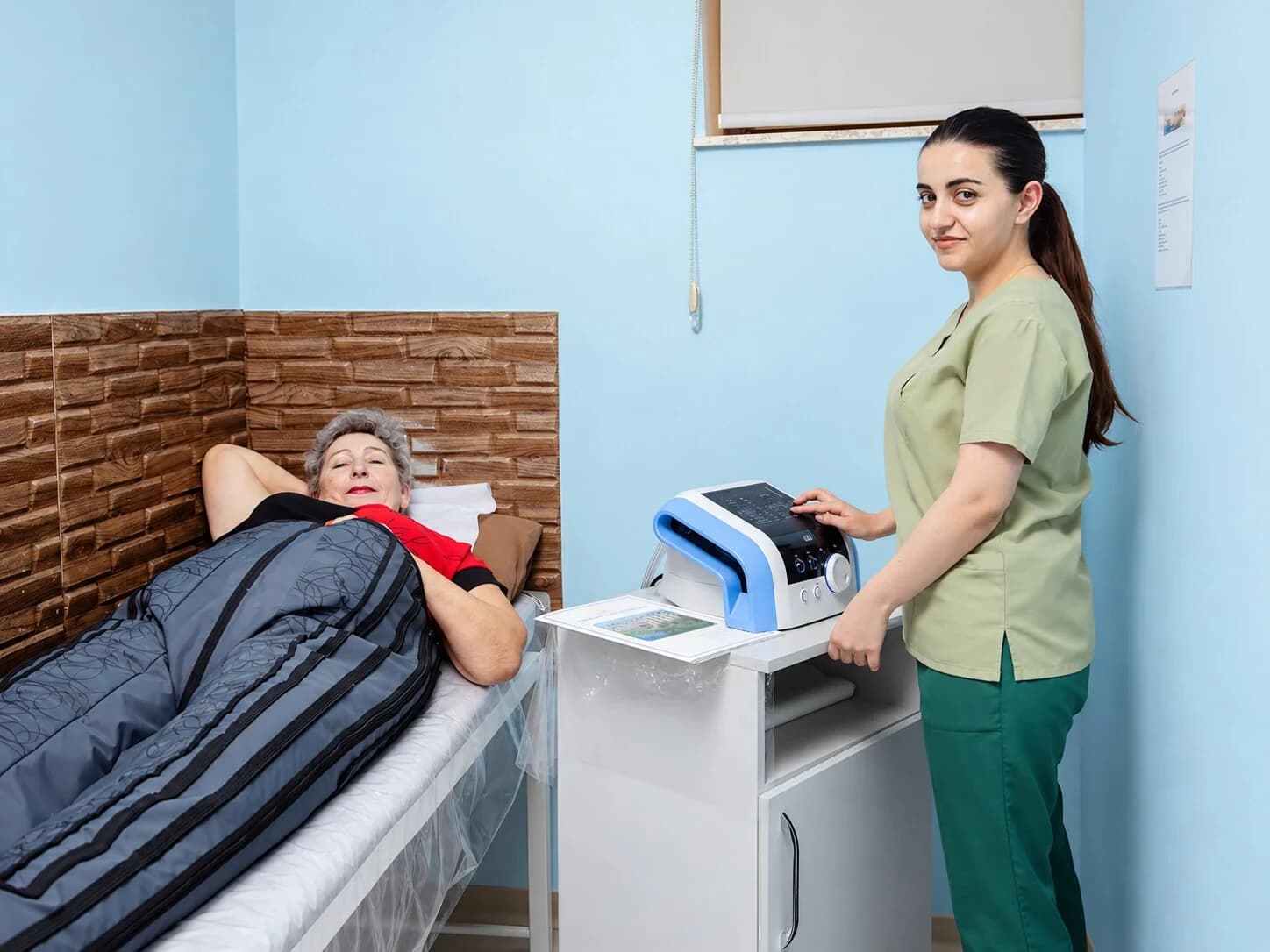
- Lymphatic drainage — swelling is the obstacle recovery runs into most often.
- SIS therapy and shockwave — on tissue repair and local pain, where indicated.
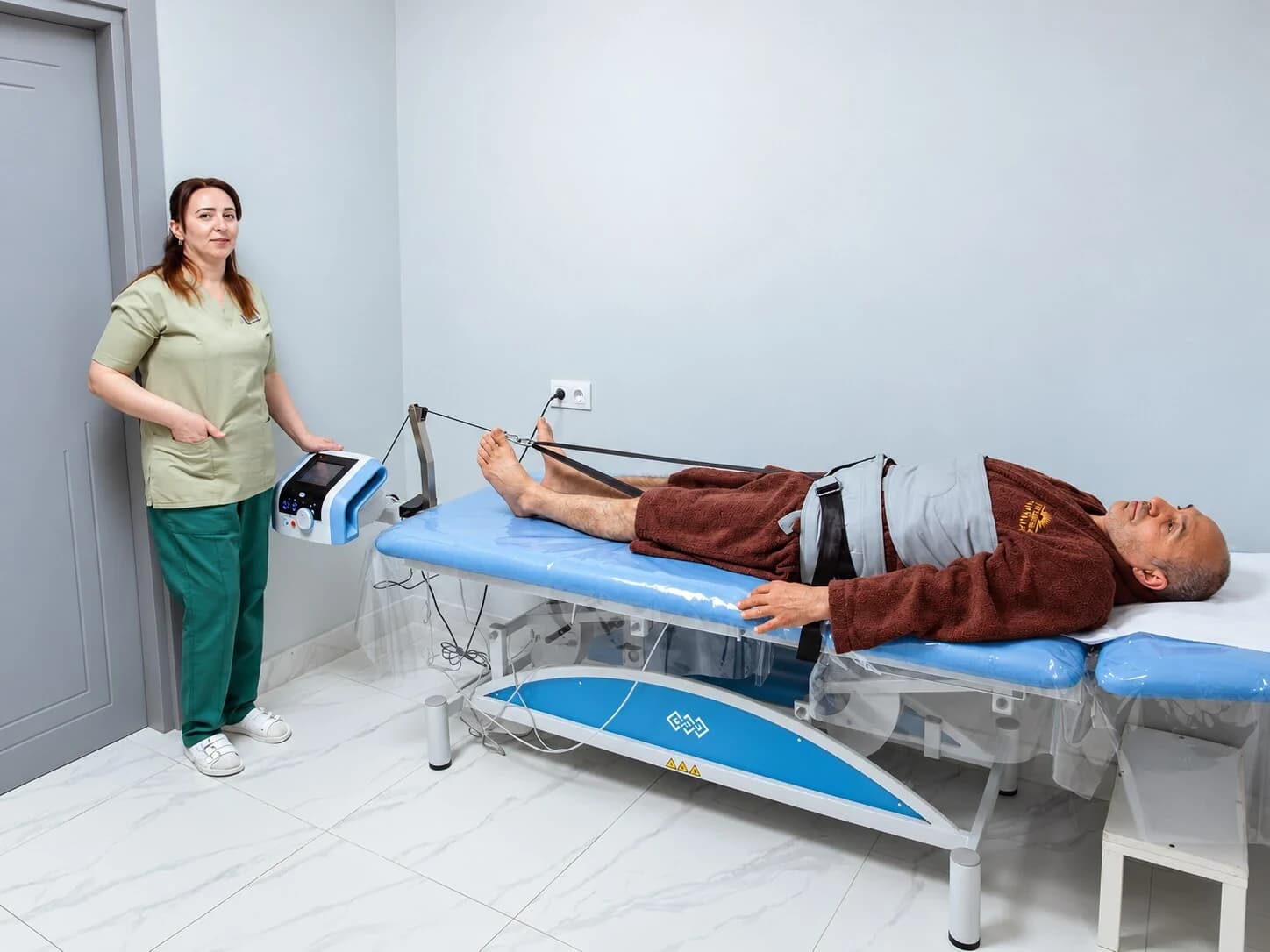
- Traction — only in spinal cases and with separate clearance.
- Therapeutic massage — at the scar and muscle-weakness stage, carefully.
- A naftalan bath or local application — once the wound has fully healed; not prescribed with an open wound or fresh sutures.
- The pool — movement in water can help recovery, but this too needs clearance.
What can be expected
The aim is to reduce swelling, increase range of movement, restore muscle tone and make the return to daily activity easier. The course is part of a rehabilitation programme, not a replacement for it; the exercises to continue at home are set by your doctor or rehabilitation specialist.
When not to start a course
An unhealed wound or suture line, signs of infection, a recent fracture or an unstable union, suspected deep vein thrombosis, fever. In these situations the trip should wait — starting a course late is far safer than starting it early.
Before you travel
Bring your operation report, your most recent imaging and your surgeon's opinion. Send them in advance and our doctors can say before the trip whether a course suits you now and which procedures are possible.