NaftalanMassage & spaKese and foam massage
Kese and foam massage
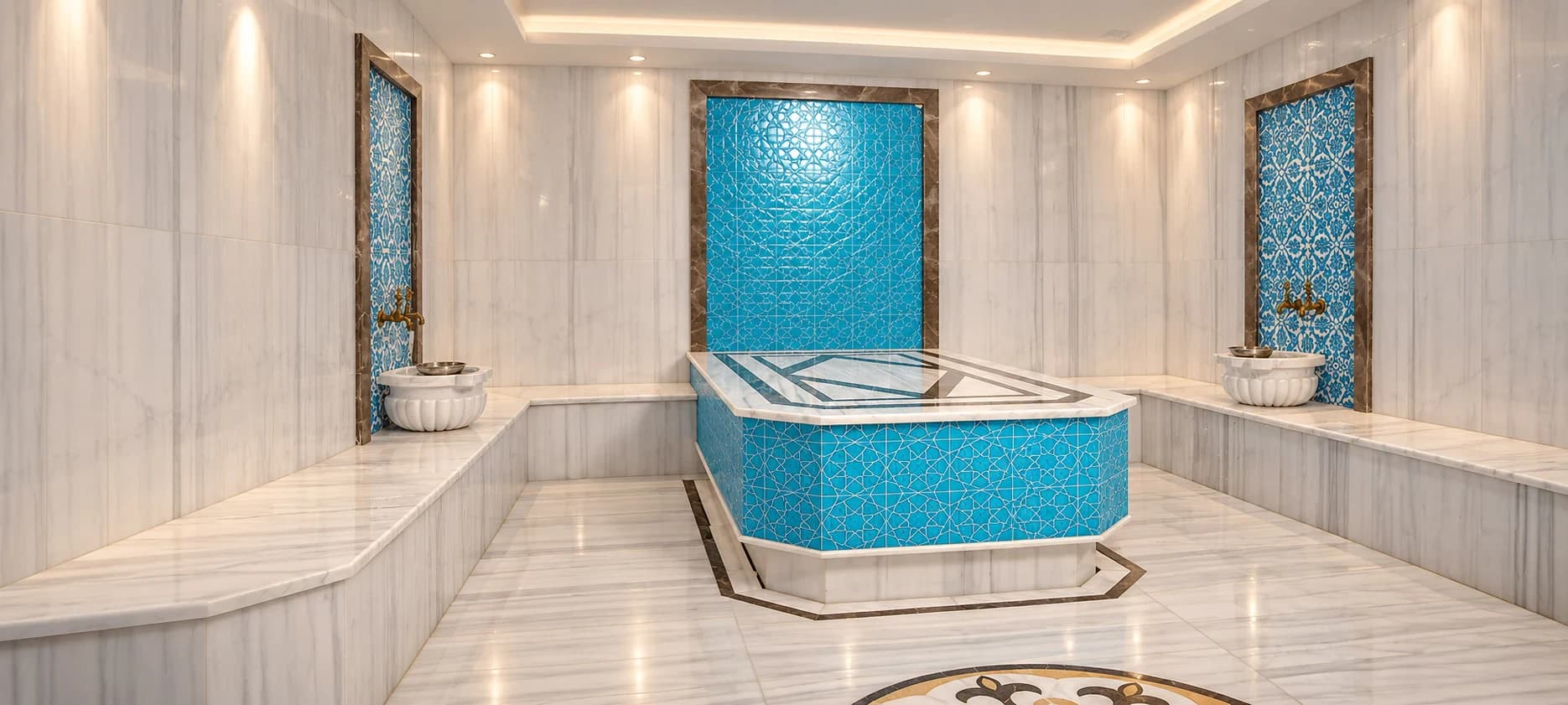
The hammam tradition: steam, exfoliation with a kese mitt, then a soft massage under foam.
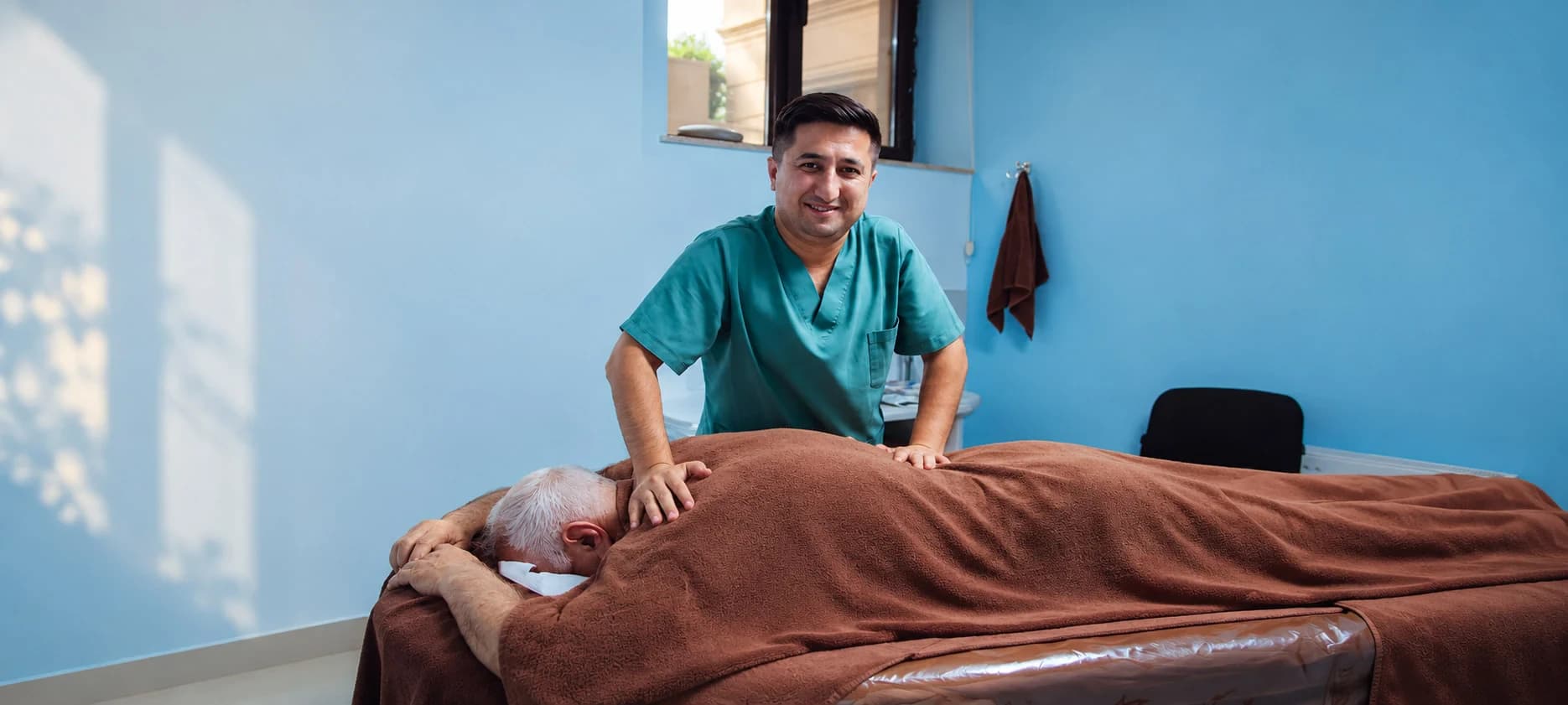
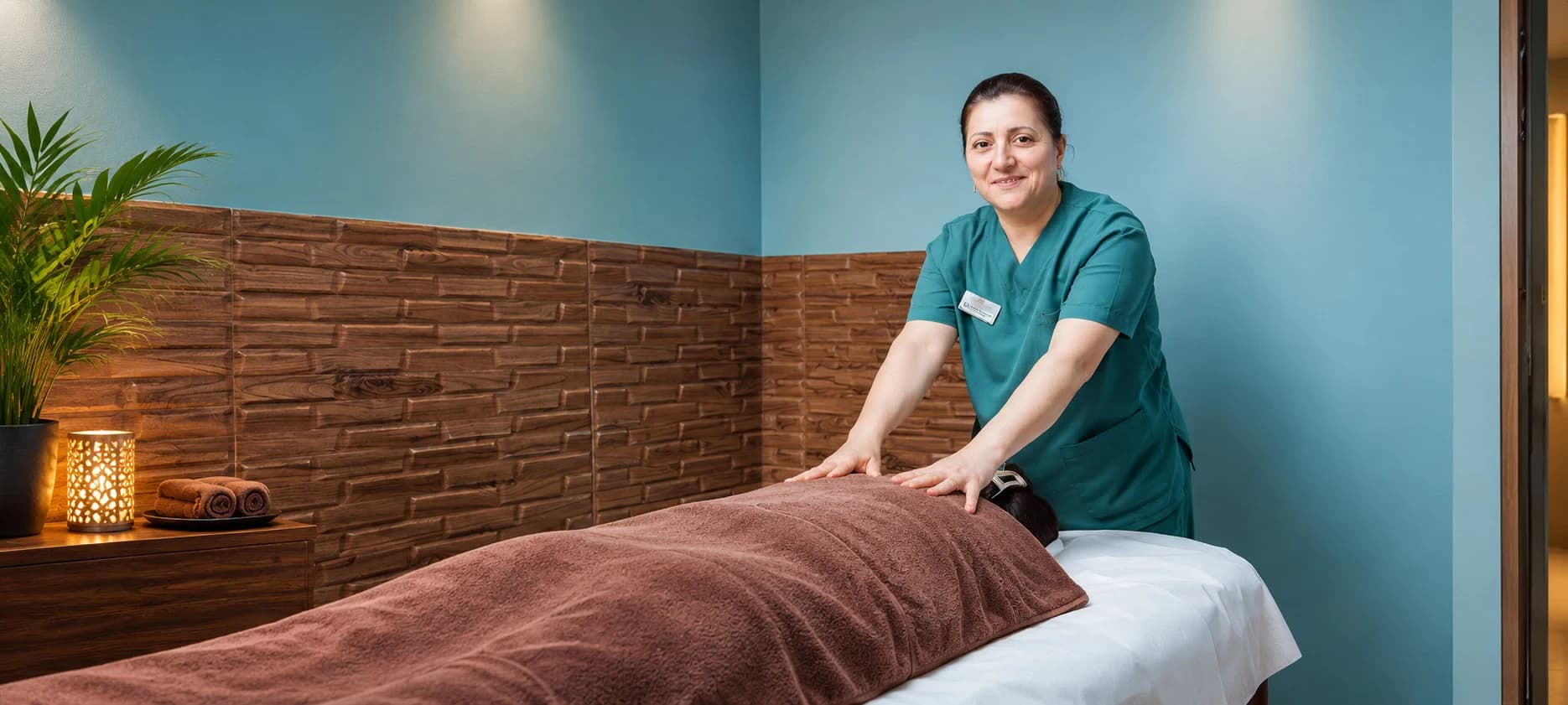
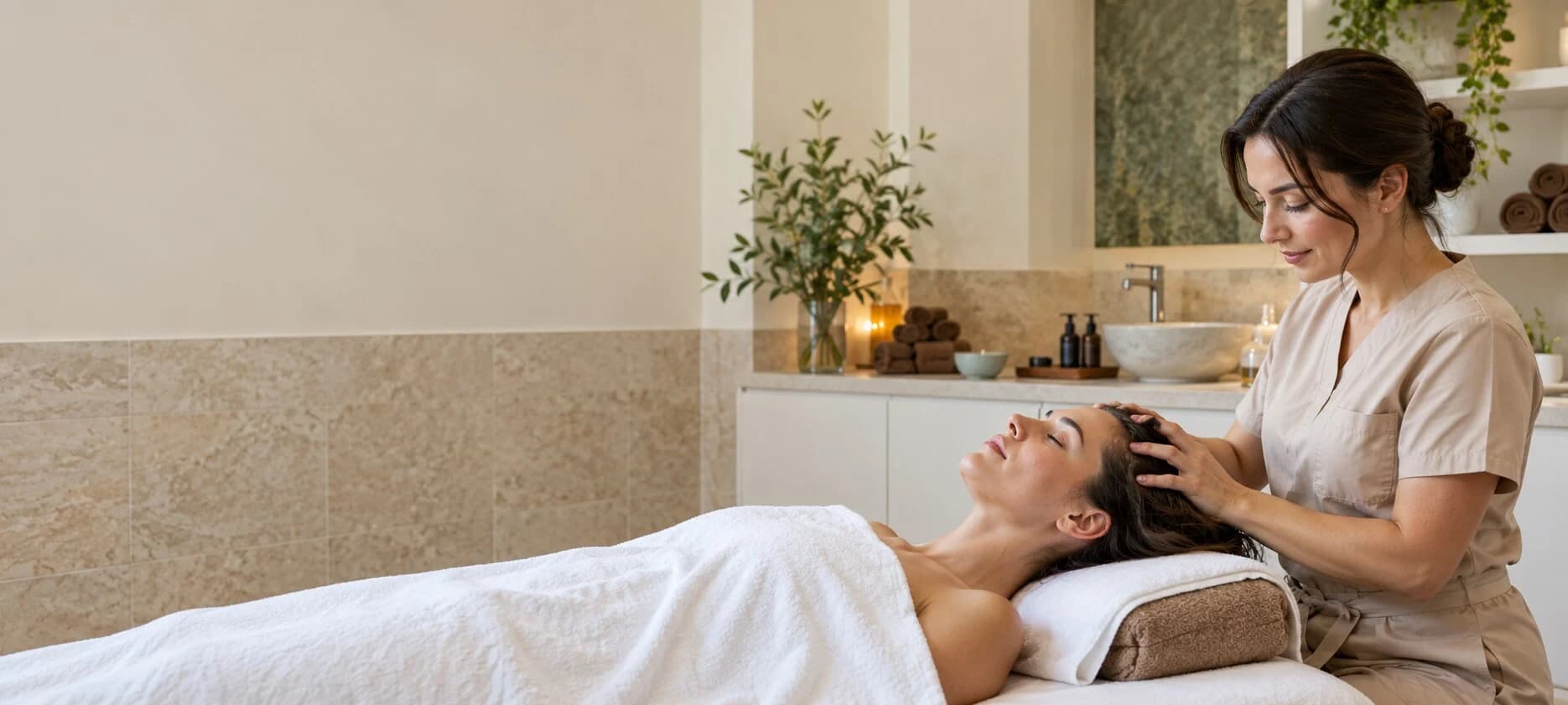
Kese and foam massage is a spa treatment from the Turkish hammam tradition, aimed at cleansing the body deeply and letting it relax. The session runs in three stages and leaves a feeling of lightness. Unlike the medical procedures, what it sets out to do is clear the skin and rest the body.
Kese and foam massage: how the three stages run
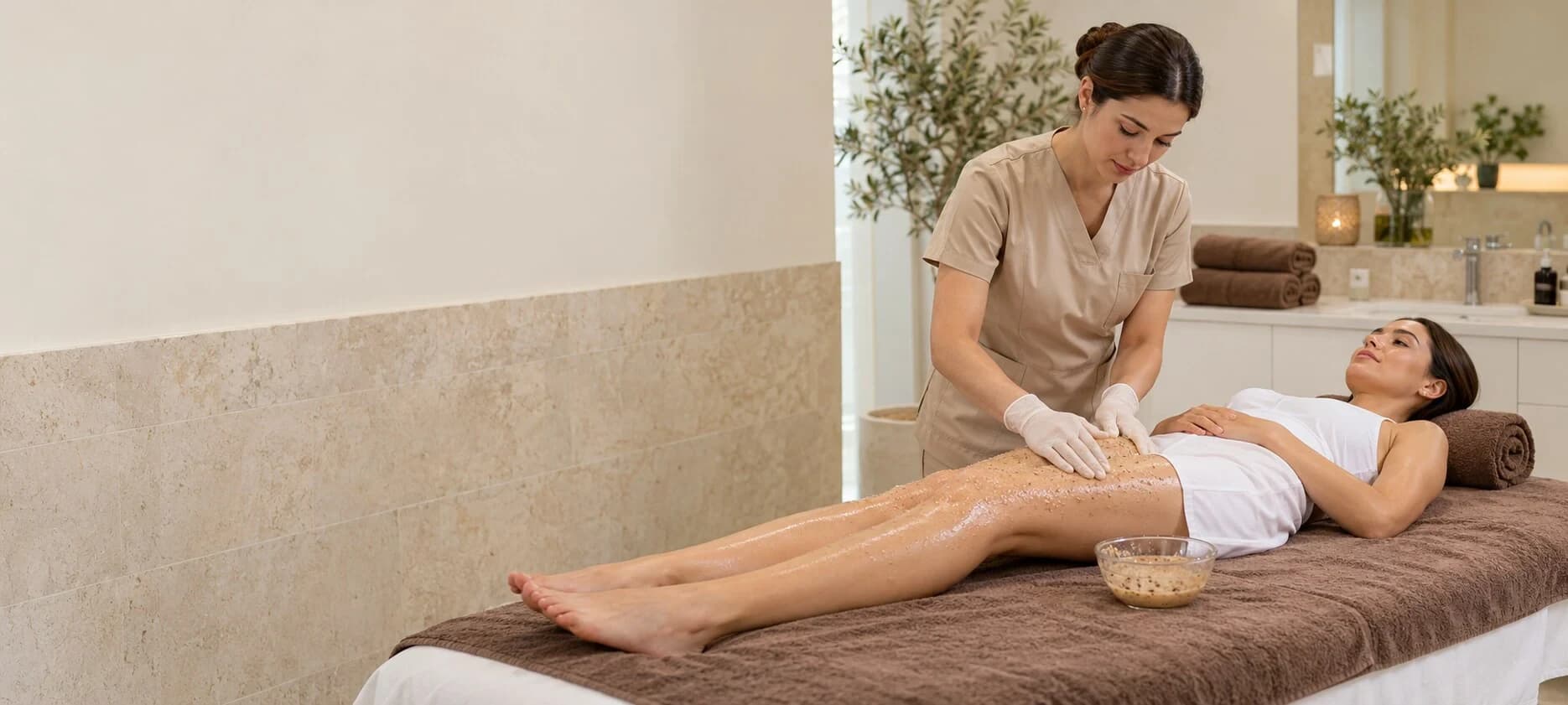
The body is first softened with hot steam — that stage is there to open the pores. The therapist then lifts the dead cells from the surface of the skin with a kese mitt, in continuous rhythmic strokes. In the third stage a soft massage is given under deep foam. A warm shower closes the session, and sitting quietly for a while afterwards is advised. No pause is kept between the stages — the session runs as one continuous sequence.
What the hammam treatment does for the skin
Given in sequence, steam, mechanical exfoliation and a foam massage both clean the skin and let the body unwind:
Steam, exfoliation and foam at work
- Dead cells lifted from the surface of the skin
- Pores opened
- Skin left smooth and fresh
- Faster circulation
- Less muscle tension
- A general feeling of lightness
- Skin that takes the care products which follow better
Who it does not suit, and when to schedule it
A heavy meal beforehand is not advised. Damaged skin, acute inflammation, a raised temperature and any restriction on heat treatments mean the session is postponed. Kese and foam massage is not a naftalan treatment; the physician keeps it off the days with a naftalan bath. Some guests place it at the start of the course — cleared skin takes the procedures that follow better.
Kese and foam massage in Naftalan — Sun City Hotel & Spa
The treatment is given in the hotel's hammam and spa area. Scheduling a scrub or a body wrap after it turns the session into a spa block of several stages, which is how most guests choose to take it. Drinking plenty of water afterwards is advised, since hot steam costs the body fluid.
Questions and answers